


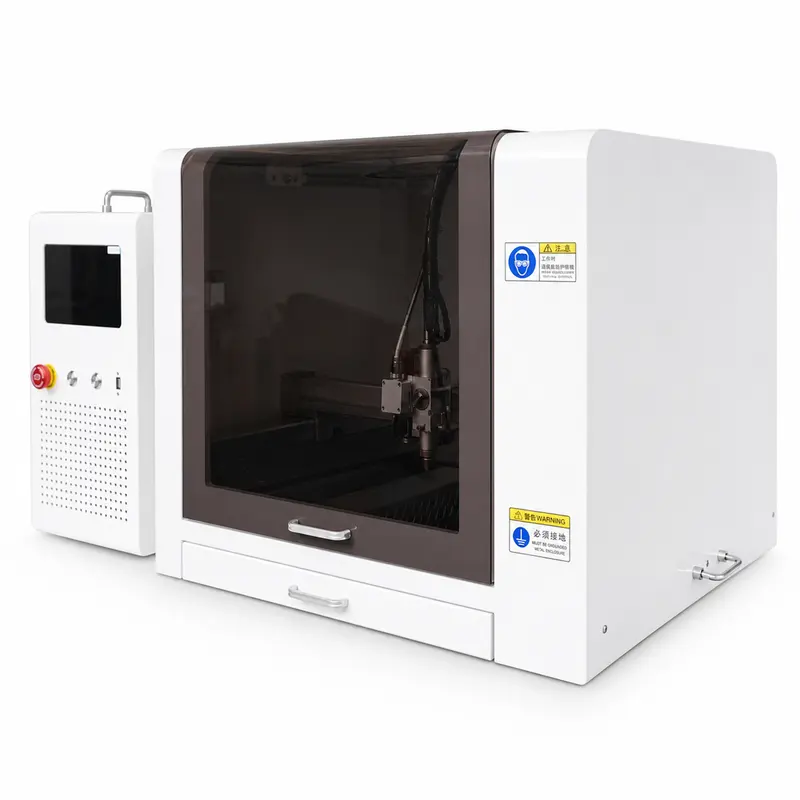
Desktop Laser Cutting Machine
GL-40-800WLaser Cutting Machine GL-40 | Industrial Laser Cutting Equipment
View Details→ Material supply is seamlessly coordinated, and processing turnover is more.
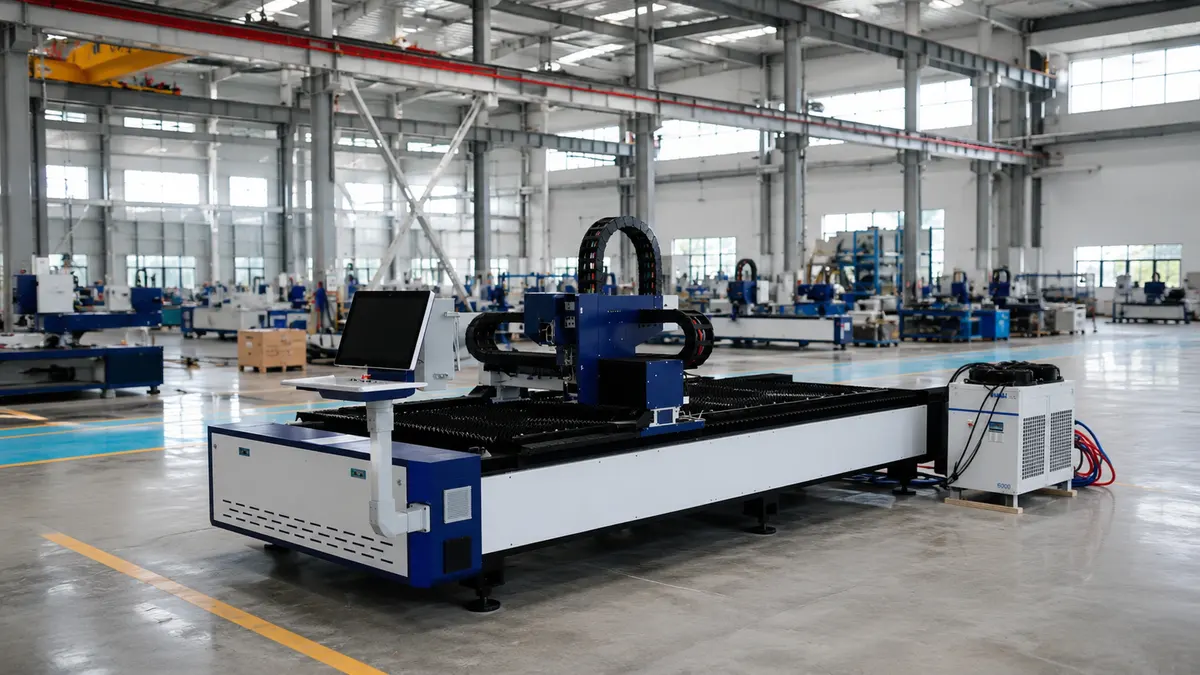 Integrate with smart production lines to unlock manufacturing efficiency.
 Precision cutting lays a solid foundation for quality.
 Handle with ease, diverse metal manufacturing tasks
 Efficient material feeding, enabling flexible sheet metal production.Material supply is seamlessly coordinated, and processing turnover is more.Integrate with smart production lines to unlock manufacturing efficiency.
01 /Description
Workshop Processing and Production-Line Use with Laser cutter GL-3015
Laser cutter GL-3015 is suited to factories, fabrication shops, production cells and custom-processing workshops. It supports repeatable cutting, forming, marking, sealing, conveying or processing with defined materials and throughput. Before deployment, confirm material type, work size, capacity, accuracy, speed, control method, power and extraction needs.
Combined with rotation, the working mechanism allows multi-directional digging and material placement, minimizing frequent machine adjustments and suiting confined construction sites.
02 / Specs & Parts


Integrates the display, emergency stop and controls for parameter setting and operation.
Guides and protects cables during repeated machine movement.
Integrates the cutting head, drive and optical components for laser processing.
Carries the cutting head along the guides for positioning across the work area.
Houses the electrical controls and auxiliary systems.
Serrated supports carry sheet material during laser cutting.
Supports the motion system, table and transmission components.
03 / Specs, Parts & Accessories
Video Showcase
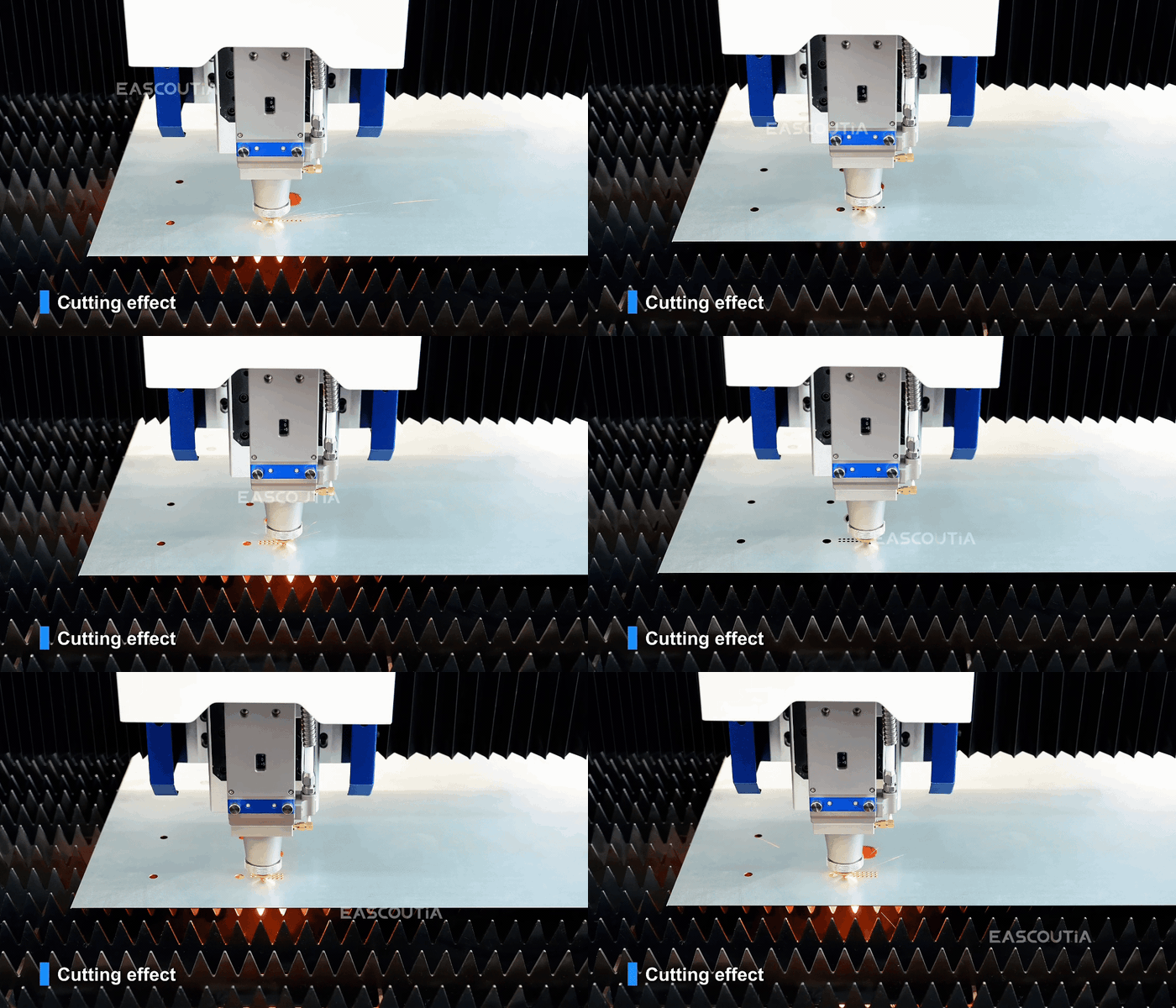
Hexagons, gears, and honeycomb grids cut in one pass; clean burr-free edges, flat sheet, no deformation—complex parts made easy.On-screen live path preview and progress; import graphics and cut, auto parameter matching—beginners run it with one touch.
Video Showcase · 01:00Hexagons, gears, and honeycomb grids cut in one pass; clean burr-free edges, flat sheet, no deformation—complex parts made easy.On-screen live path preview and progress; import graphics and cut, auto parameter matching—beginners run it with one touch.
Operation Videos · 00:55Cuts stainless, carbon steel, and copper sheets—cabinets, signage, kitchenware, door/window work; loads a full 3m×1.5m sheet at once
Service Videos · 00:37Strict loading supervision, compliant stowage, forging premium maritime quality.
Service Videos · 00:08From material selection to compliance labeling, providing end-to-end customized packaging solutions.
Real on-site records from our factory, offering a practical view of our production capability and delivery readiness.
04/ Product Review
Product Review
We centrally purchase equipment, test the data and the machine, then publish the models that clear our review. You get a shorter path from "could work" to a quote your team can act on.
1. It is commonly used for factories, fabrication shops, production cells and custom-processing workshops, subject to the selected model and site conditions.
2. Match material type, work size, capacity, accuracy, speed, control method, power and extraction needs to the actual workload and operating environment.
3. Confirm model, working area, power, tooling, control system and optional fixtures, then verify the response time and any special requirements.
4. Prepare rated utilities, safe operating clearance, ventilation or dust extraction and operator training; follow the manual for operation, inspection and routine maintenance.
 Simplified explanation
