


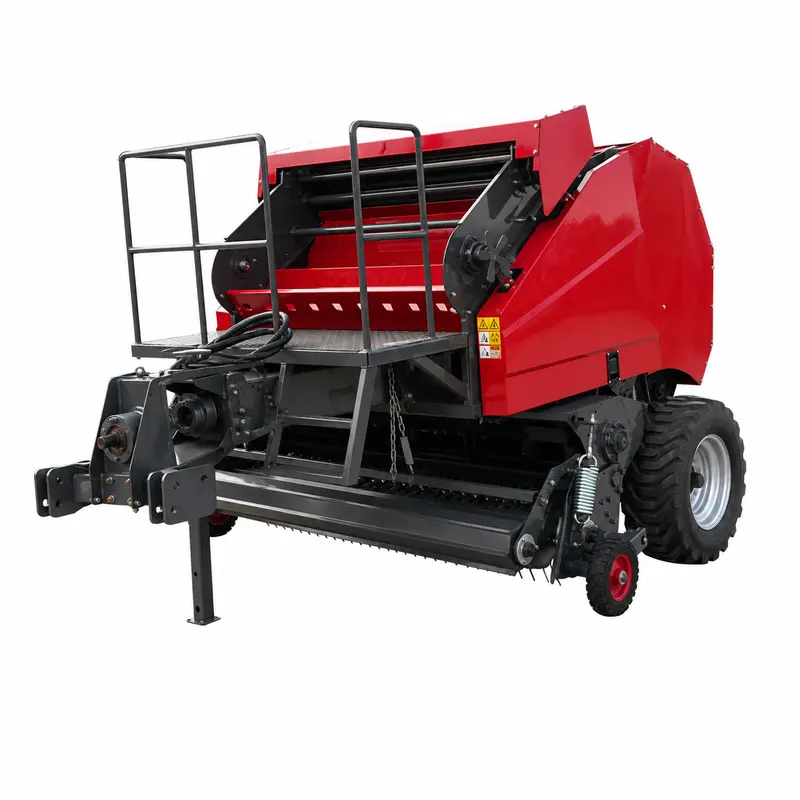
Round baler
9YQ-19509YQ-1950 Round-Bale Hay Wrapper | High Efficiency in the Field | Easy Maintenance
View Details→

 Rotary rake gathers dry grass into neat rows for baling.
 Tractor forms organized hay windrows across the farm field.
 Rake collects cut hay efficiently across wide open fields.
 Tractor rakes hay across sloped fields and uneven terrain.Rotary rake gathers dry grass into neat rows for baling.Tractor forms organized hay windrows across the farm field.
01 /Description
Field Preparation and Farm Maintenance with Cylinder
Cylinder is suited to farms, orchards, nurseries and seasonal land-maintenance work. Match the implement to its stated agricultural task, tractor interface and field conditions. Before deployment, confirm working width, power, terrain, crop type, capacity, attachment interface and operator method.
02 / Specs & Parts
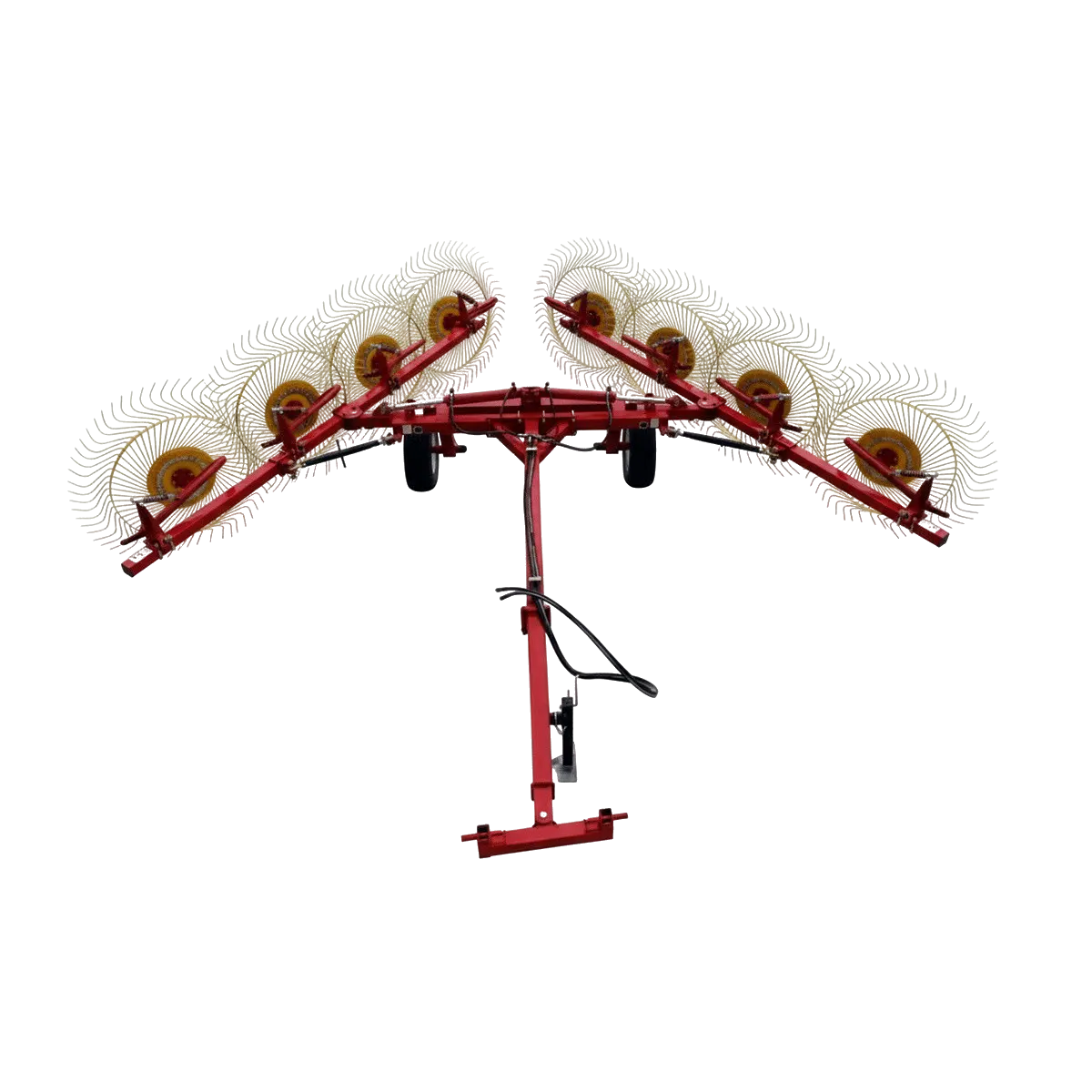
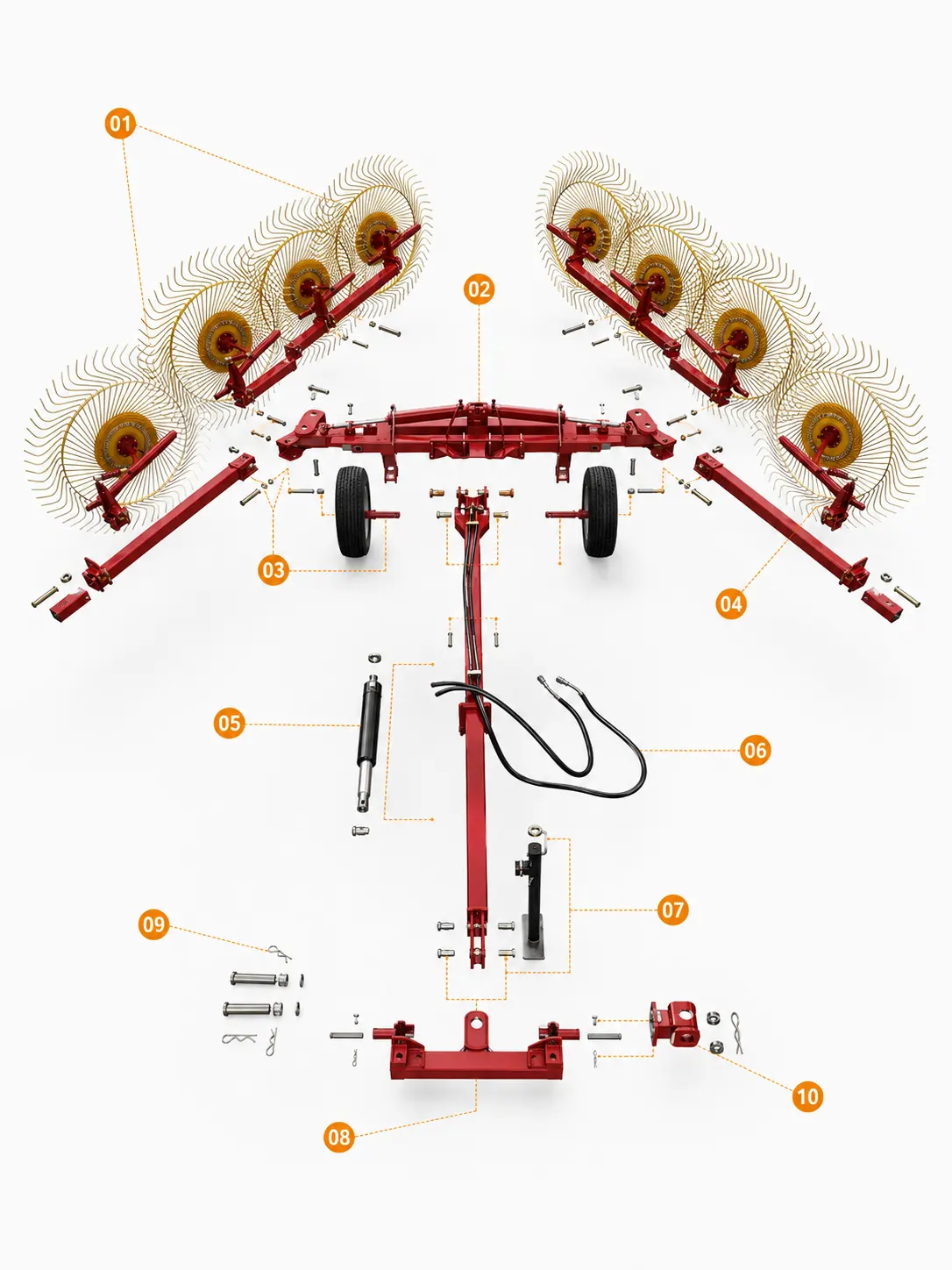
The tine wheels gather cut crop into even windrows while following field contours during operation.
The central frame supports both rake wings and distributes working loads across the machine.
The ground wheel supports the frame, improves balance, and maintains stable travel on uneven fields.
The side extension arm carries the outer rake wheels and expands the effective working width.
The hydraulic cylinder controls folding movement for convenient field adjustment and transport.
The hydraulic hoses route pressurized oil between the tractor supply and folding cylinder system.
The adjustable support jack stabilizes the drawbar and keeps the implement level when parked.
03 / Specs, Parts & Accessories
Operation Videos
Multiple tine wheels comb the stubble close to the ground and gather dry hay into even windrows ready for baling.
1. It is commonly used for farms, orchards, nurseries and seasonal land-maintenance work, subject to the selected model and site conditions.
2. Match working width, power, terrain, crop type, capacity, attachment interface and operator method to the actual workload and operating environment.
3. Confirm model, power, working attachment, tire or track type and optional implements, then verify the response time and any special requirements.
4. Prepare appropriate fuel or charging support, safe attachment setup and pre-work inspection on level ground; follow the manual for operation, inspection and routine maintenance.
 Simplified explanation