


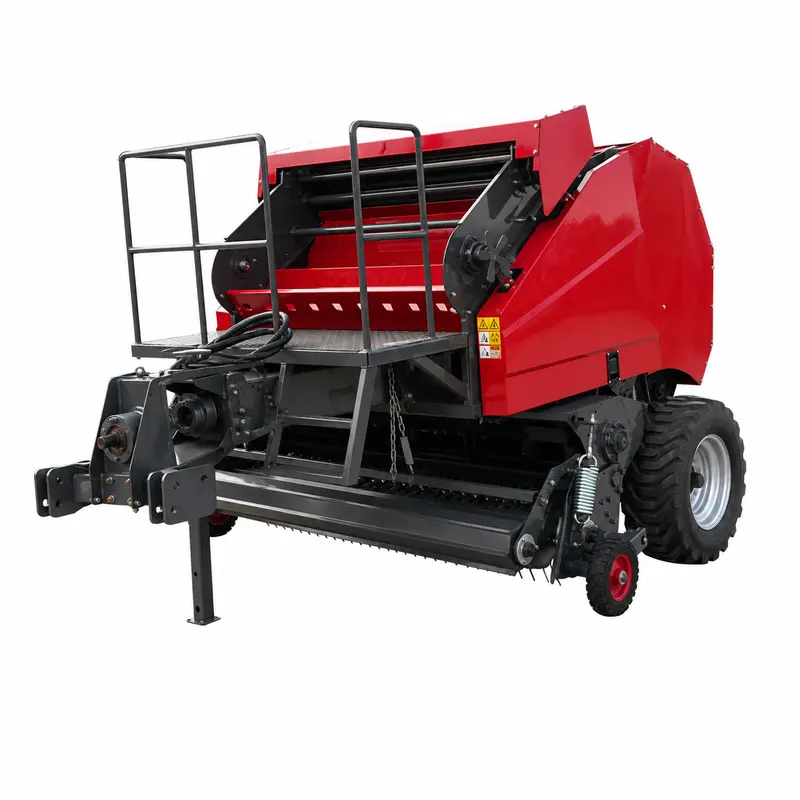
Round baler
9YQ-19509YQ-1950 Round-Bale Hay Wrapper | High Efficiency in the Field | Easy Maintenance
View Details→

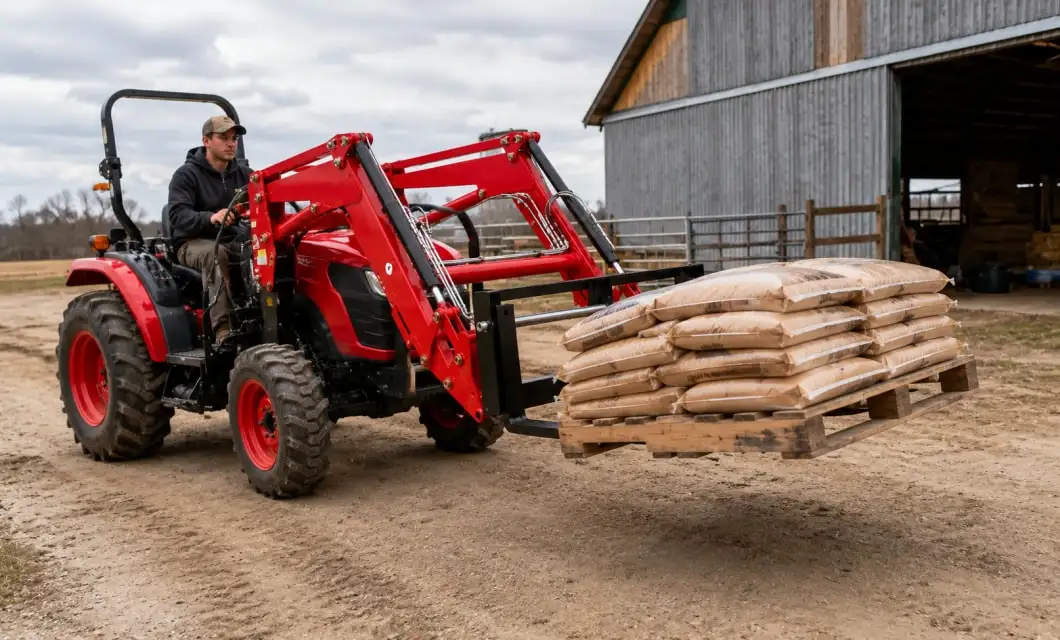 Tractor forks lift bagged farm supplies for organized yard transport and.
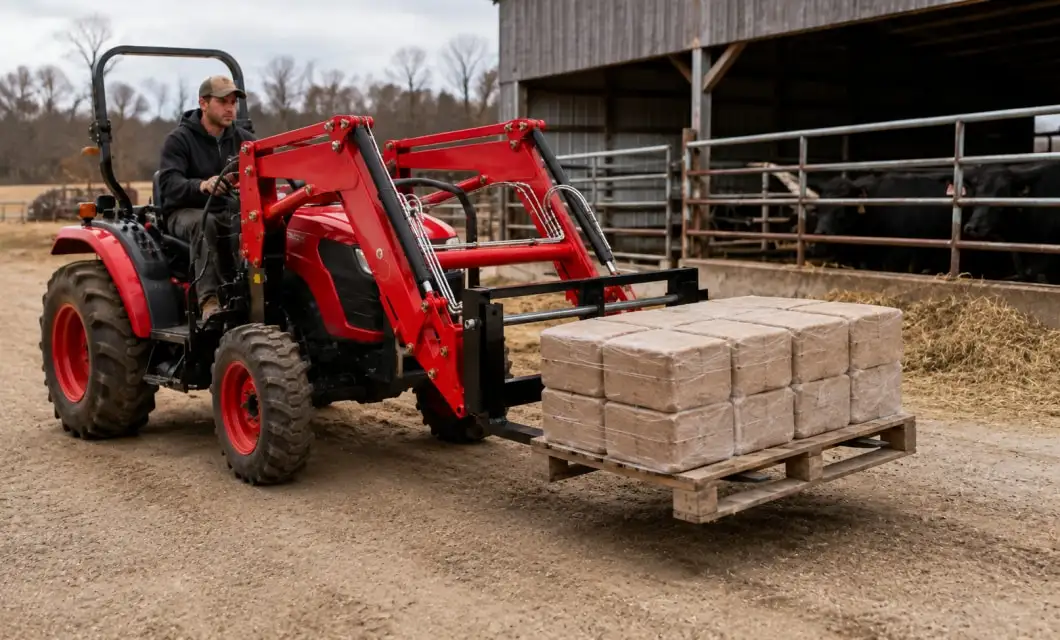 Pallet forks move livestock feed safely between storage buildings and animal.
 Tractor forks transport palletized plants and growing supplies through the.
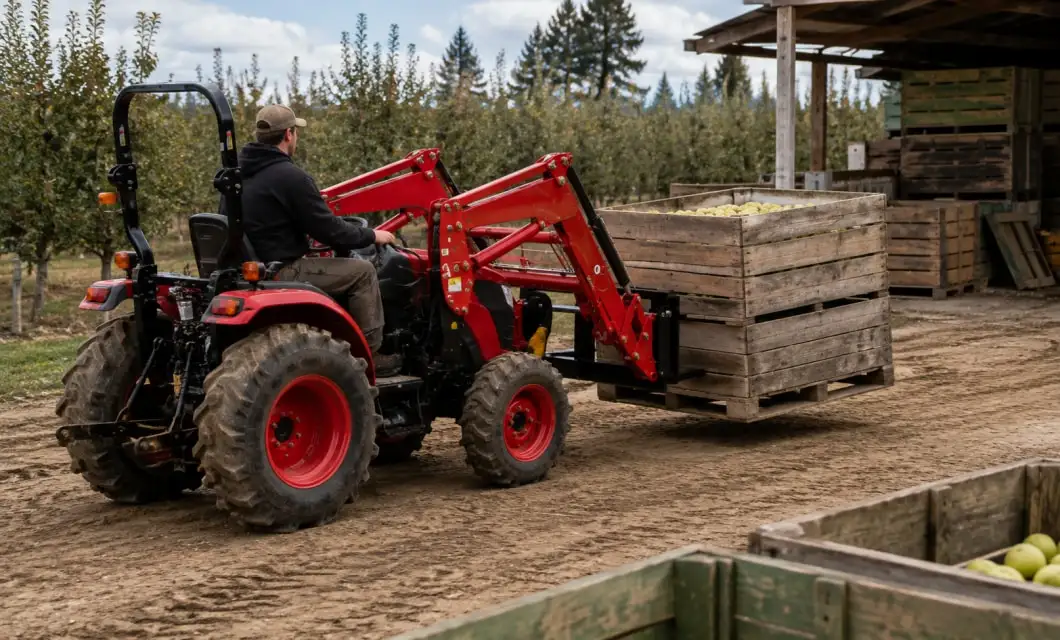 Front-loader forks move produce crates around the orchard during harvest.Tractor forks lift bagged farm supplies for organized yard transport and.Pallet forks move livestock feed safely between storage buildings and animal.
01 /Description
Field Preparation and Farm Maintenance with Tray fork
Tray fork is suited to farms, orchards, nurseries and seasonal land-maintenance work. Match the implement to its stated agricultural task, tractor interface and field conditions. Before deployment, confirm working width, power, terrain, crop type, capacity, attachment interface and operator method.
02 / Specs & Parts

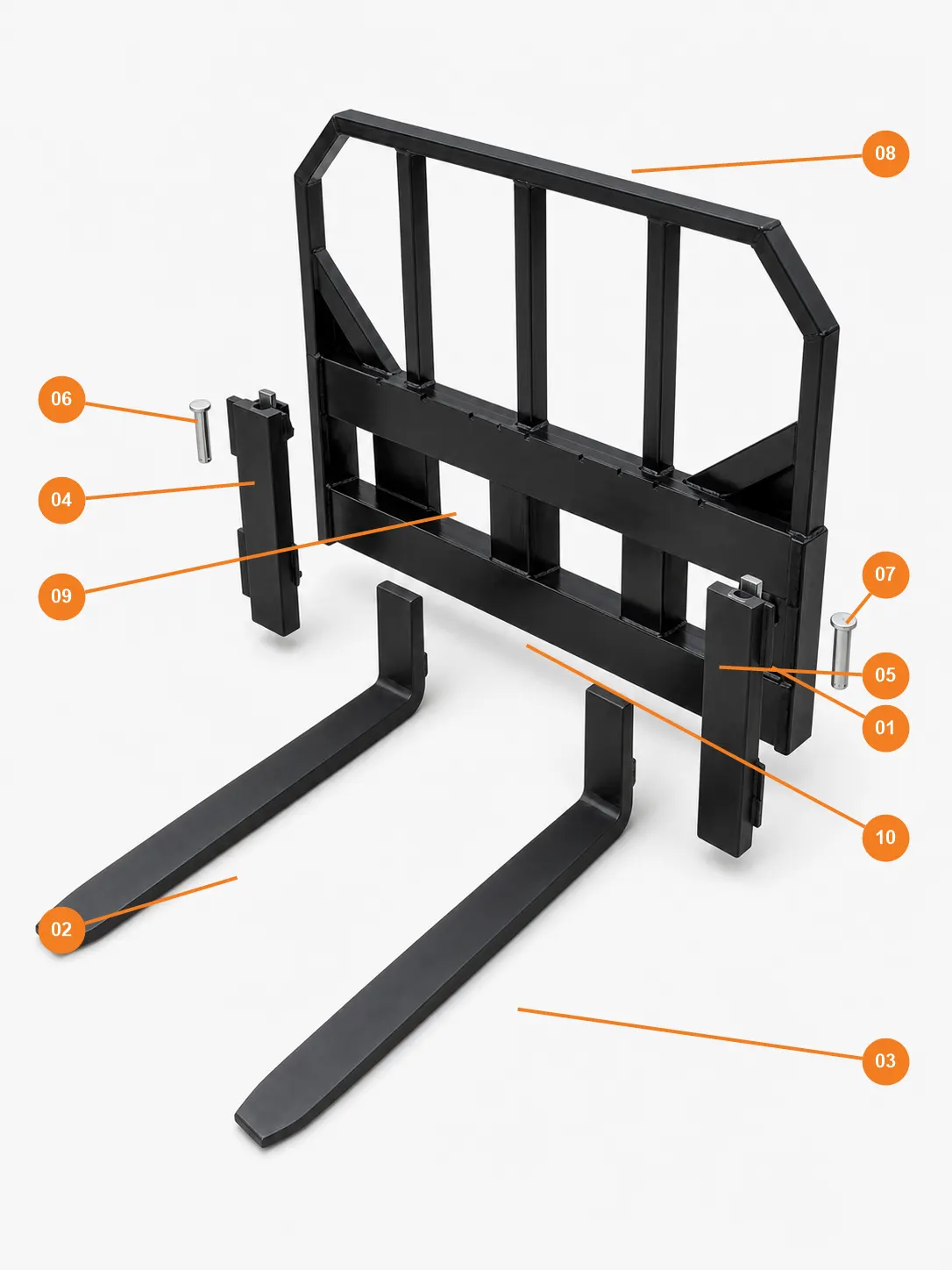
The side locking latch helps retain the mounting block securely against the main frame during use.
The heavy-duty left fork tine supports pallet loads and transfers weight into the carriage frame.
The right fork tine supports the opposite load side for stable and balanced pallet handling.
The left mounting block connects the fork structure to the frame and supports secure positioning.
The right mounting block provides the opposite attachment point and supports stable installation.
The removable left retaining pin secures the side mounting block and allows convenient disassembly.
The removable right retaining pin locks the mounting block for reliable attachment security.
03 / Specs, Parts & Accessories
Video Showcase
Pallet Fork Horizontal Operation Demonstration
1. It is commonly used for farms, orchards, nurseries and seasonal land-maintenance work, subject to the selected model and site conditions.
2. Match working width, power, terrain, crop type, capacity, attachment interface and operator method to the actual workload and operating environment.
3. Confirm model, power, working attachment, tire or track type and optional implements, then verify the response time and any special requirements.
4. Prepare appropriate fuel or charging support, safe attachment setup and pre-work inspection on level ground; follow the manual for operation, inspection and routine maintenance.
 Simplified explanation