


5-Ton Ride-On Crawler Transporter
RD5.0T5-ton seated tracked transporter—outstanding in agile transportation and track‑based mobility
View Details→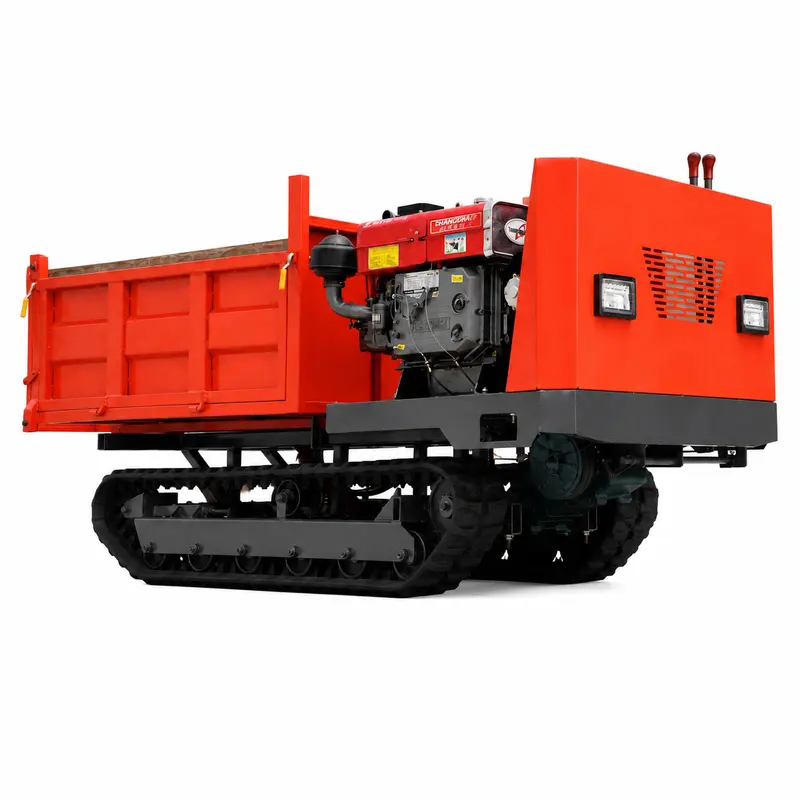
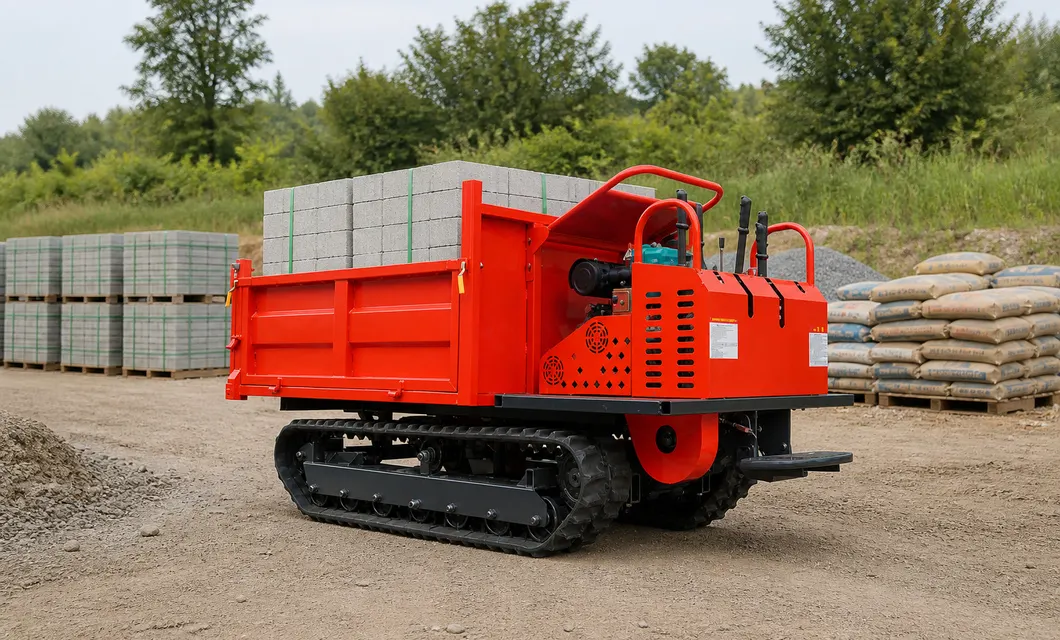 construction-material-hauling
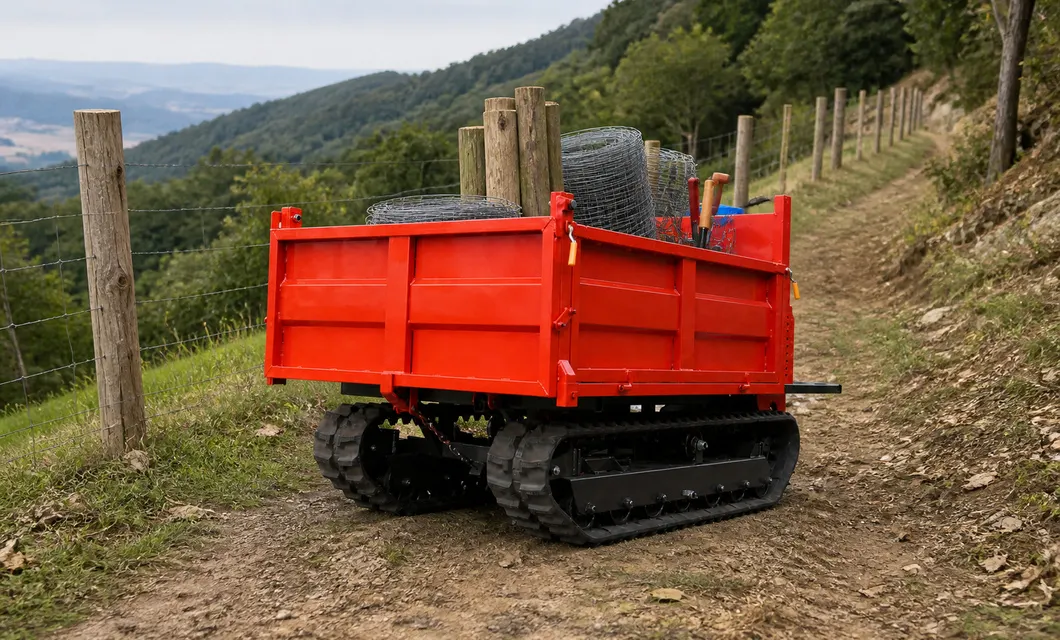 hillside-fence-maintenance
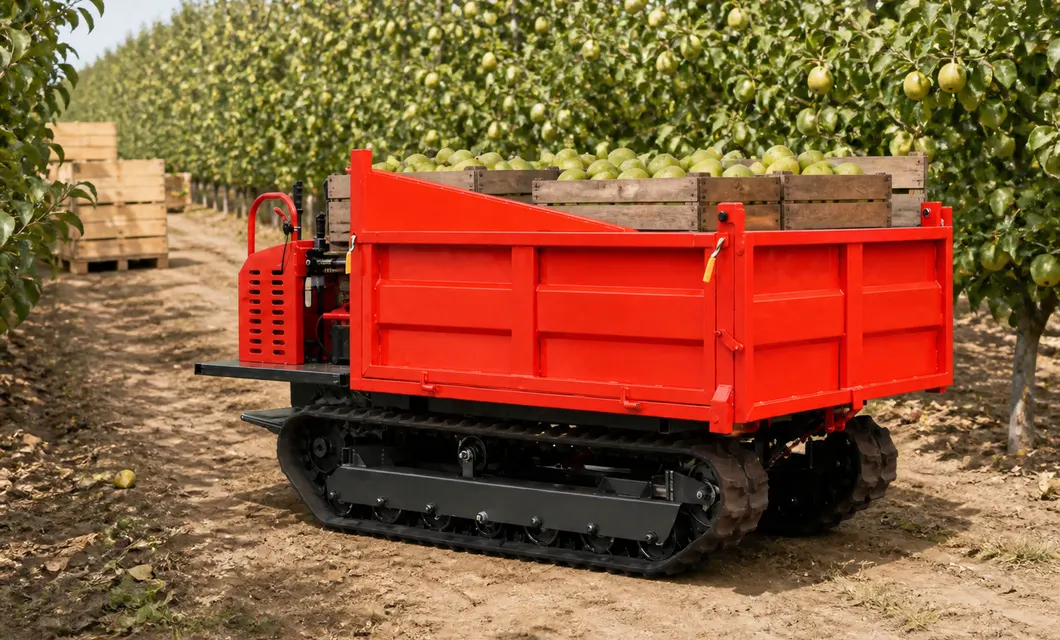 orchard-harvest-transport
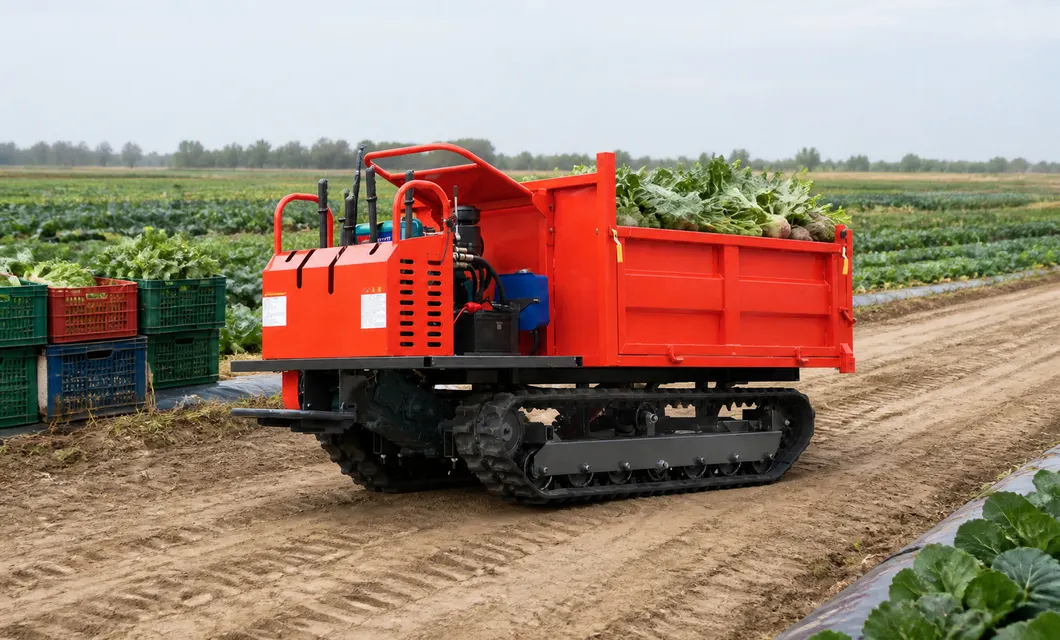 vegetable-farm-supply-runconstruction-material-haulinghillside-fence-maintenance
01 /Description
Walk-Behind Tracked Carrier
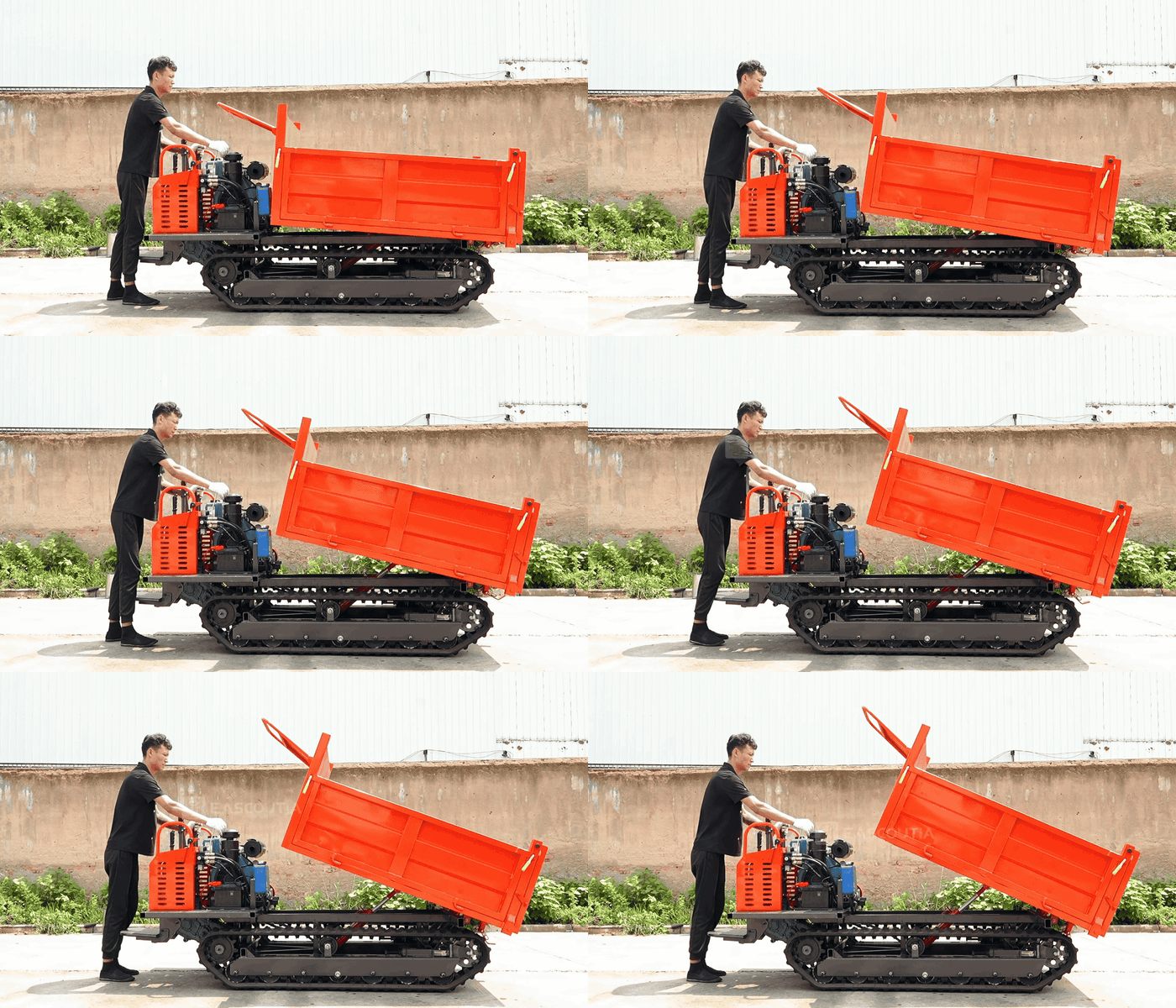
A walk-behind tracked carrier for short-distance material transport, combining a tipping cargo box, diesel power, and rubber crawler traction.
Combined with rotation, the working mechanism allows multi-directional digging and material placement, minimizing frequent machine adjustments and suiting confined construction sites.
02 / Specs & Parts


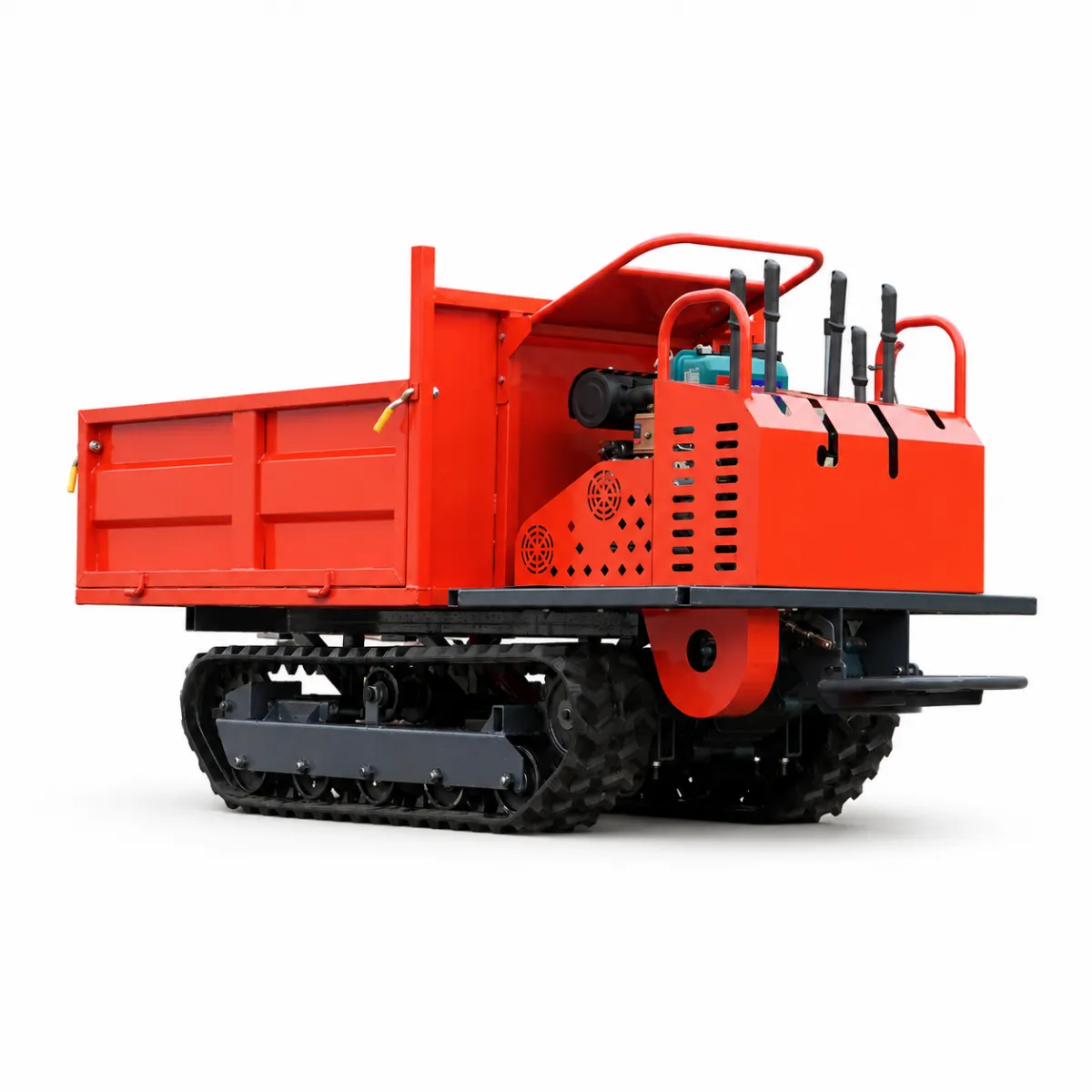
The long red cargo box retains its visible panels, tailgate and latches for bulk material transport.
The black upper frame supports the cargo box and preserves its confirmed mounts and hinge positions.
The extended central chassis aligns the power, controls, reservoir and paired track modules.
The air-cooled diesel engine remains complete with its confirmed housings, mounts and exterior form.
The front console combines the hand levers, guards and visible valve block for walking operation.
The blue external reservoir separates from its side bracket while retaining its visible tank form.
The matched track pair carries six reinforced road wheels per side for stable load support.
03 / Specs, Parts & Accessories
Video Showcase
An appearance showcase of a 2-ton hand-guided machine. Close-up views of the frame, controls, wheel assembly, and key details—so you can quickly see the overall look, build quality, and design highlights. Rated capacity: 2 tons.
Video Showcase · 00:23An appearance showcase of a 2-ton hand-guided machine. Close-up views of the frame, controls, wheel assembly, and key details—so you can quickly see the overall look, build quality, and design highlights. Rated capacity: 2 tons.
Operation Videos · 00:38An operation demonstration of a 2-ton walk-behind machine. From power-on and controls to everyday working moves, this walkthrough covers the full walk-behind workflow so you can quickly see how to use it and what matters in real operation. Rated capacity: 2 tons.
Real on-site records from our factory, offering a practical view of our production capability and delivery readiness.
04/ Product Review
Product Review
We centrally purchase equipment, test the data and the machine, then publish the models that clear our review. You get a shorter path from "could work" to a quote your team can act on.
1. It is commonly used for industrial parks, logistics routes, worksites and managed fleet operations, subject to the selected model and site conditions.
2. Match payload, dimensions, axle or tire specification, powertrain, route and regulatory requirements to the actual workload and operating environment.
3. Confirm model, color, payload, axle or tire specification and optional equipment, then verify the response time and any special requirements.
4. Prepare delivery inspection, approved registration where applicable and scheduled tire, brake and fluid checks; follow the manual for operation, inspection and routine maintenance.
 Simplified explanation
