

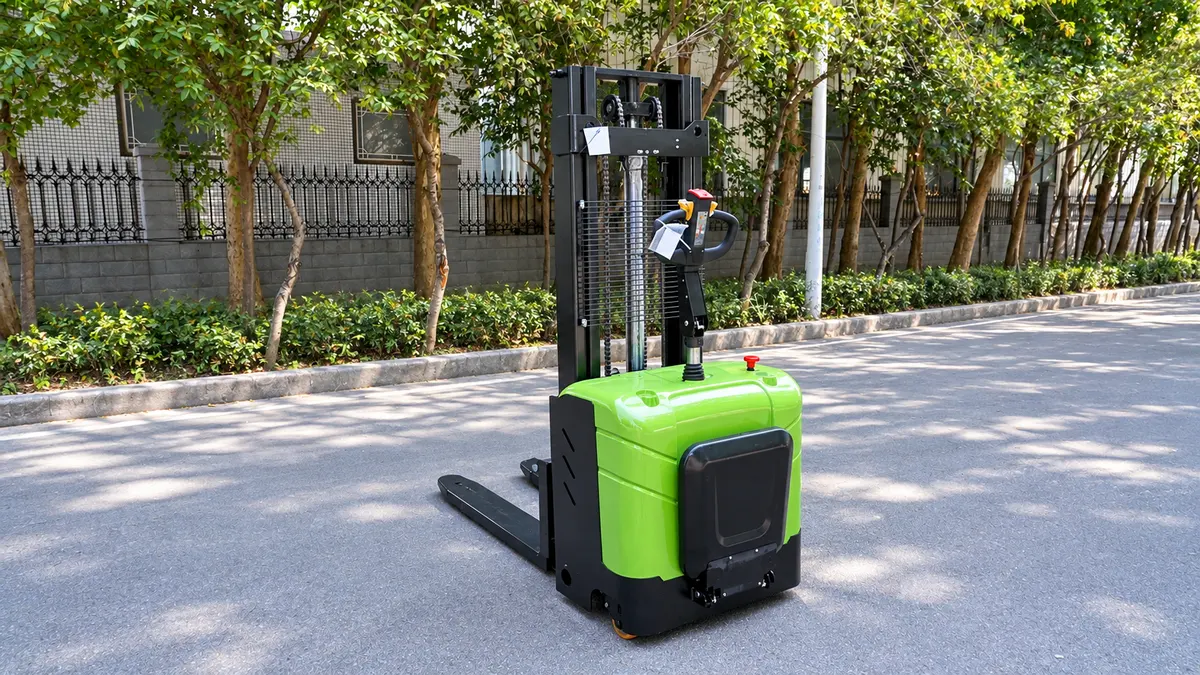

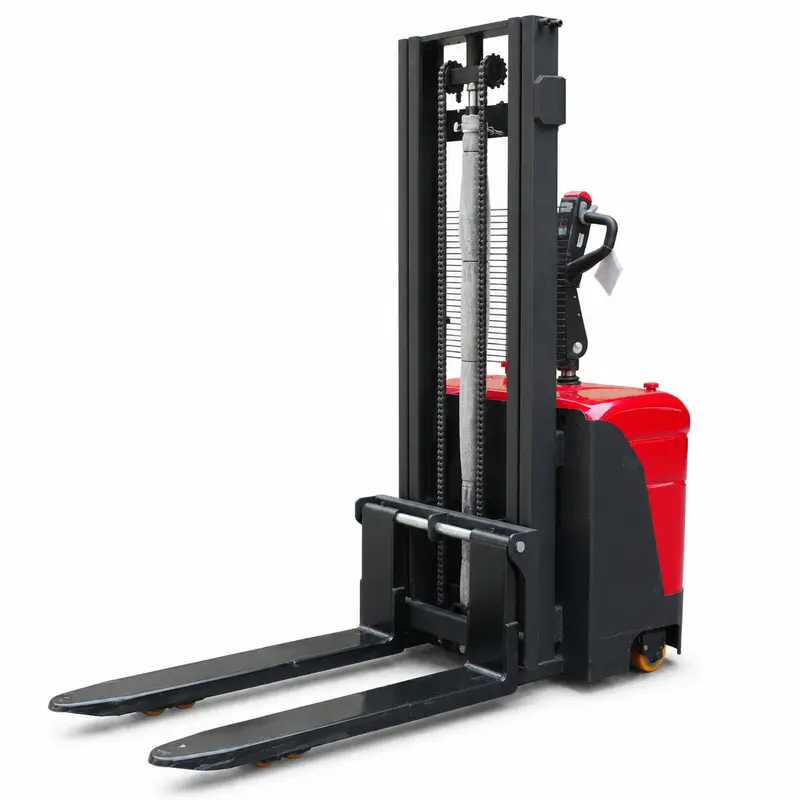
Stand-on forklift (red)
CZD151.5-ton, 1.5T High-Efficiency Stand-Drive Electric Forklift VY-CZD15 (Red)
View Details→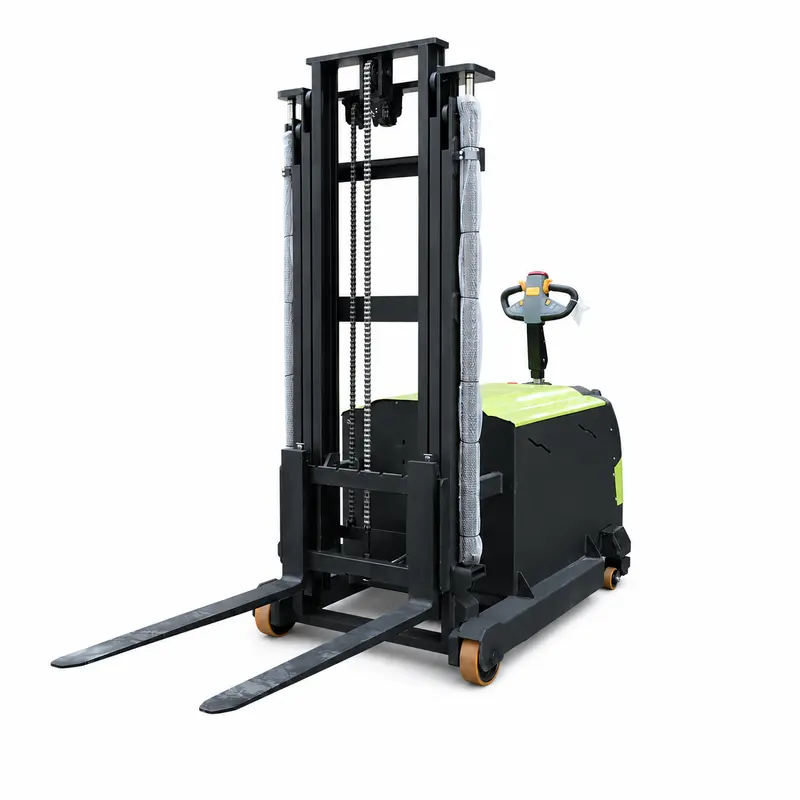

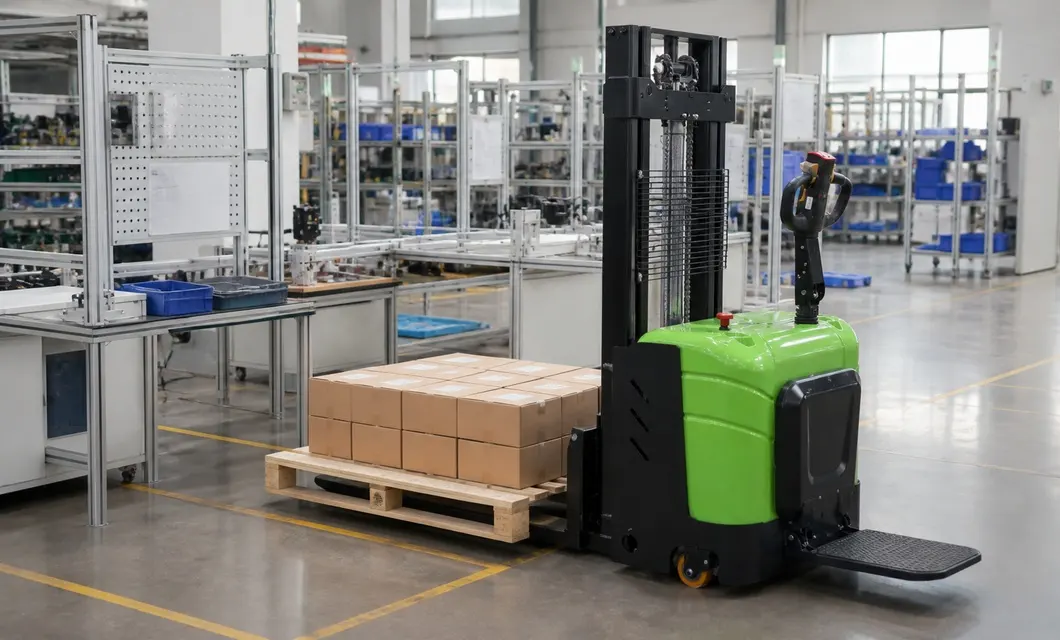 Compact Material Supply for Workcells
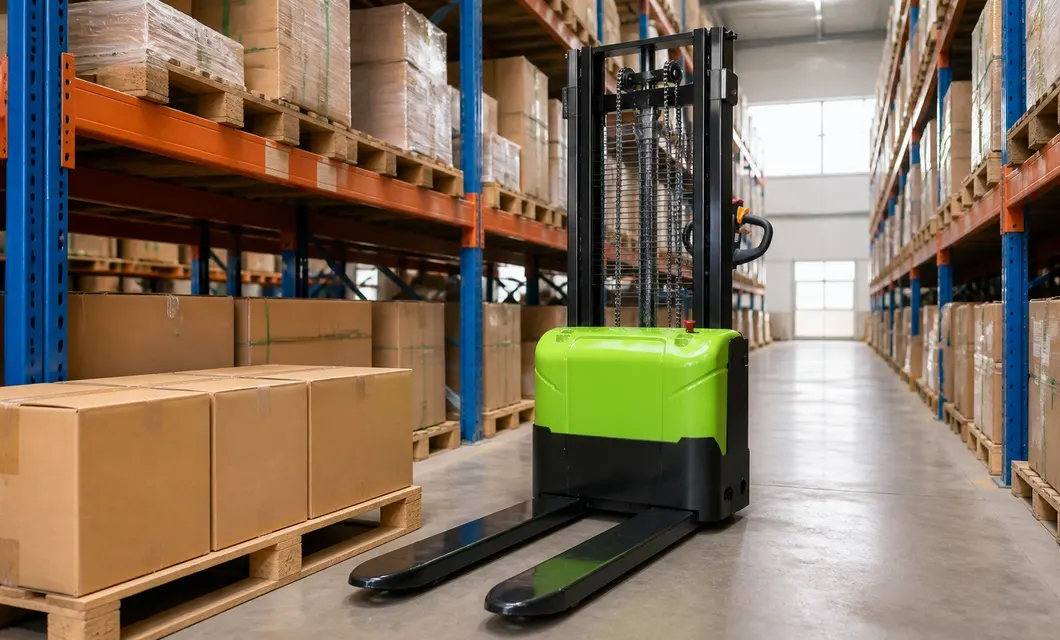 Controlled Stacking in Narrow Aisles
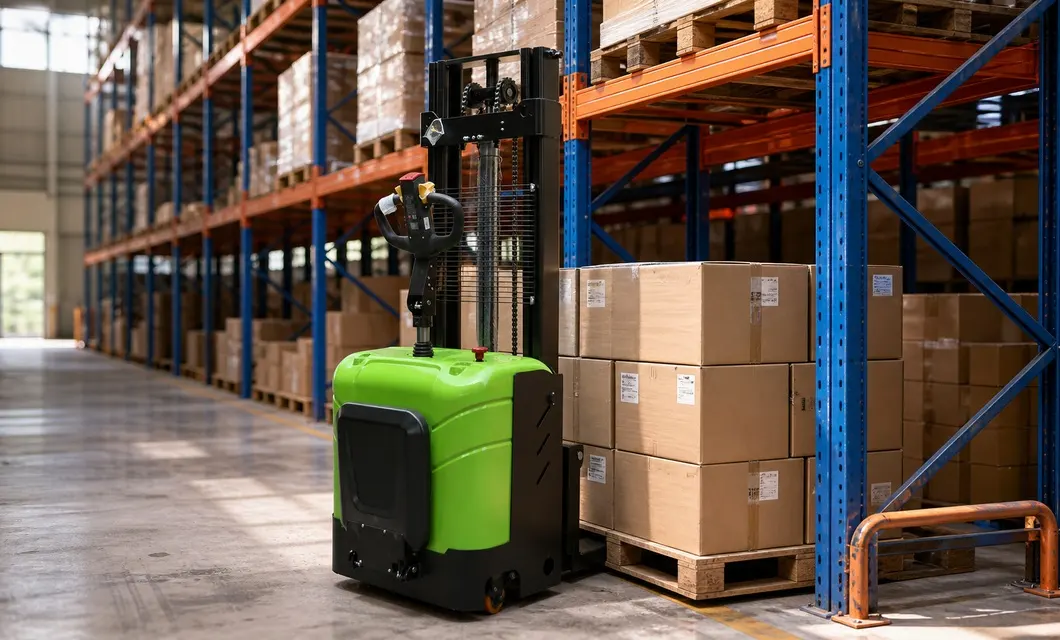 Precise Pallet Placement in Rack Aisles
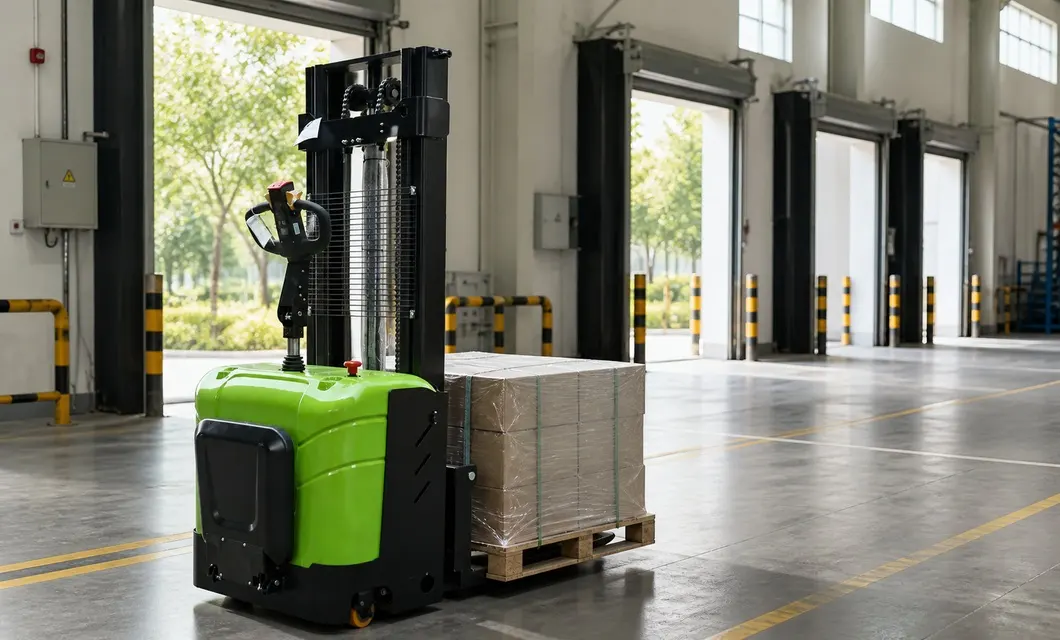 Smooth Load Transfer at Dispatch BaysCompact Material Supply for WorkcellsControlled Stacking in Narrow Aisles
01 /Description
Green Stacker material handling and positioning
This model supports controlled pallet lifting, short-distance movement and placement in prepared warehouse, loading and production areas. The visible fork path and operator controls support deliberate alignment and repeatable material flow without unsupported performance claims.
Combined with rotation, the working mechanism allows multi-directional digging and material placement, minimizing frequent machine adjustments and suiting confined construction sites.

02 / Specs & Parts
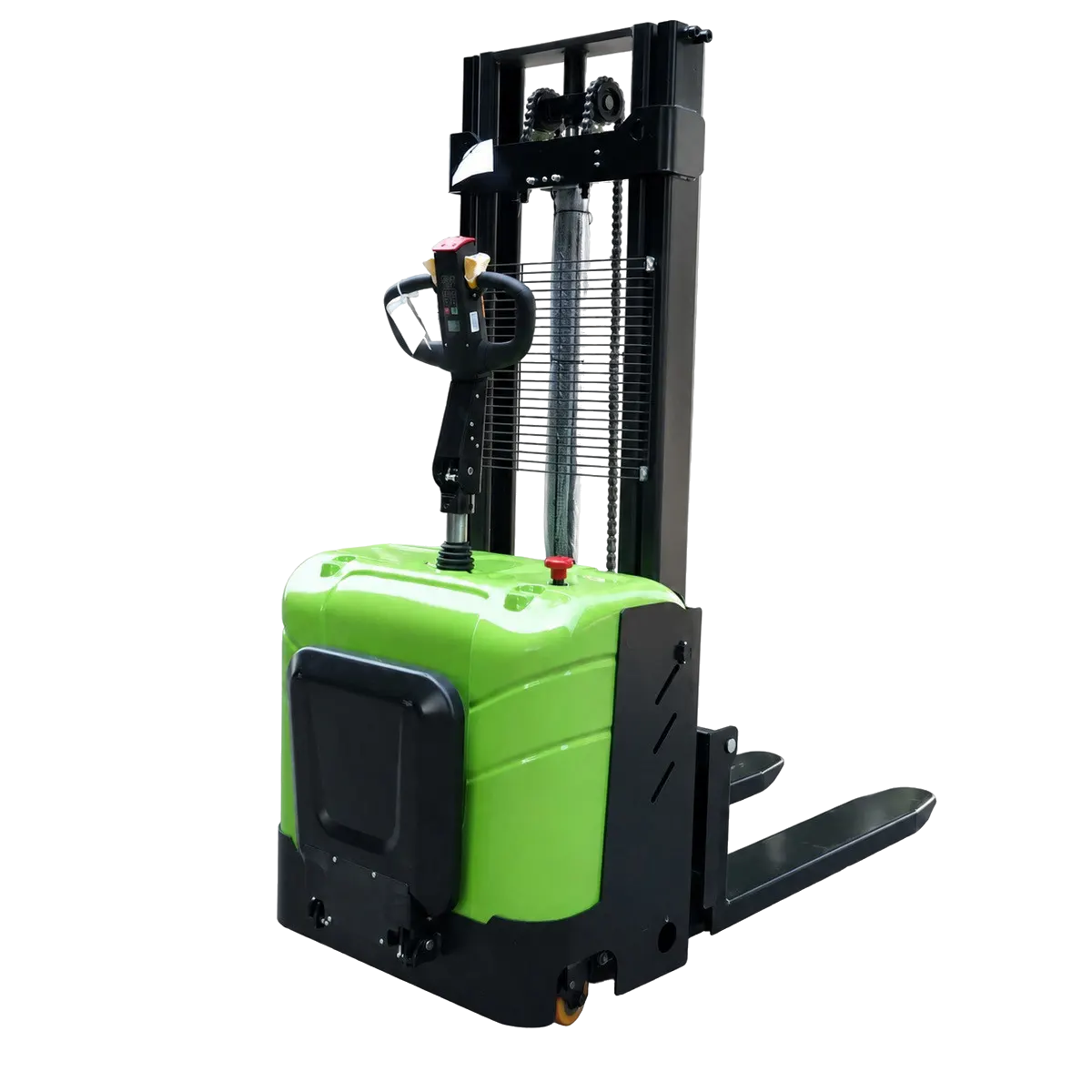

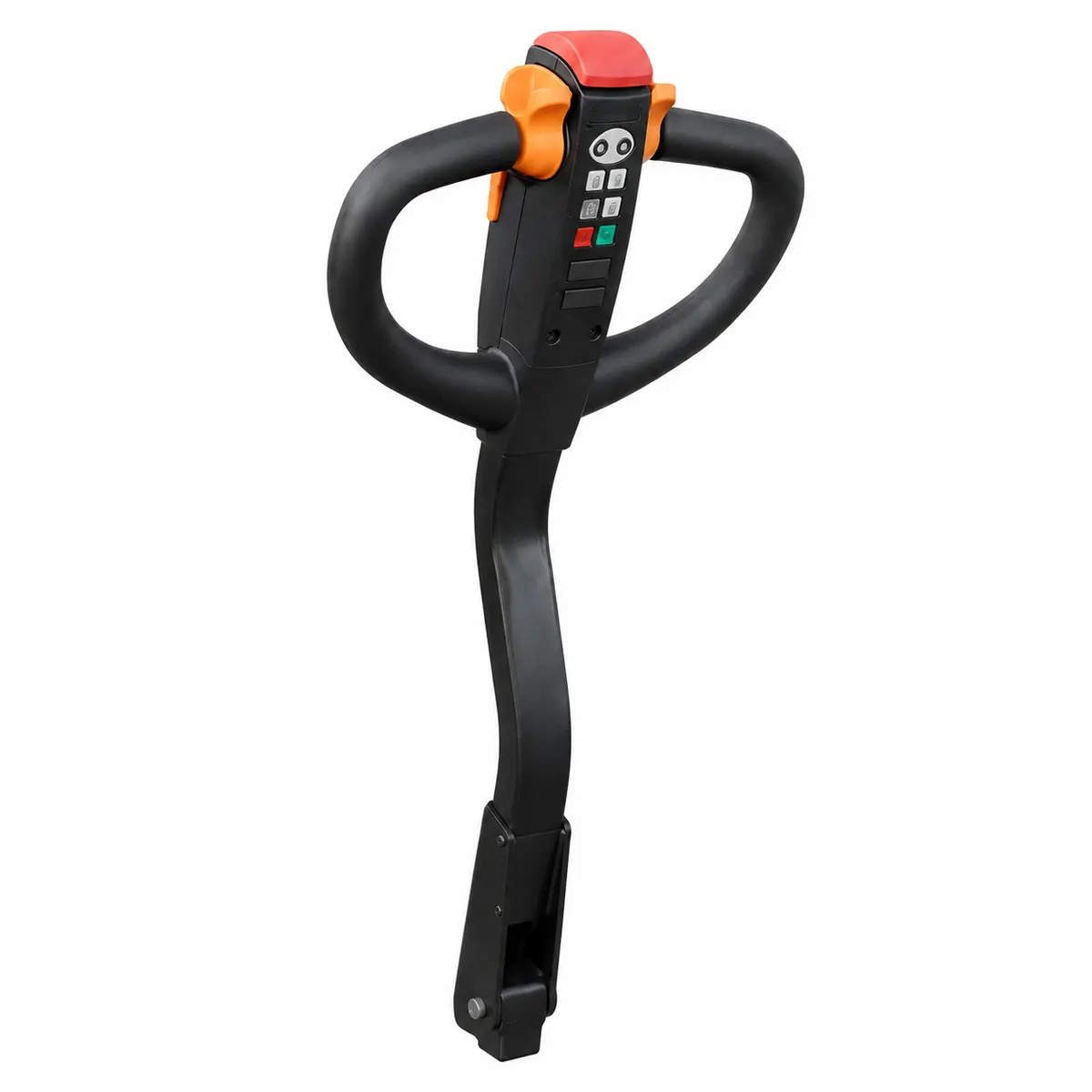
Integrates traveling, steering, lifting and emergency stop functions. Clear layout ensures efficient handling and stacking operations.
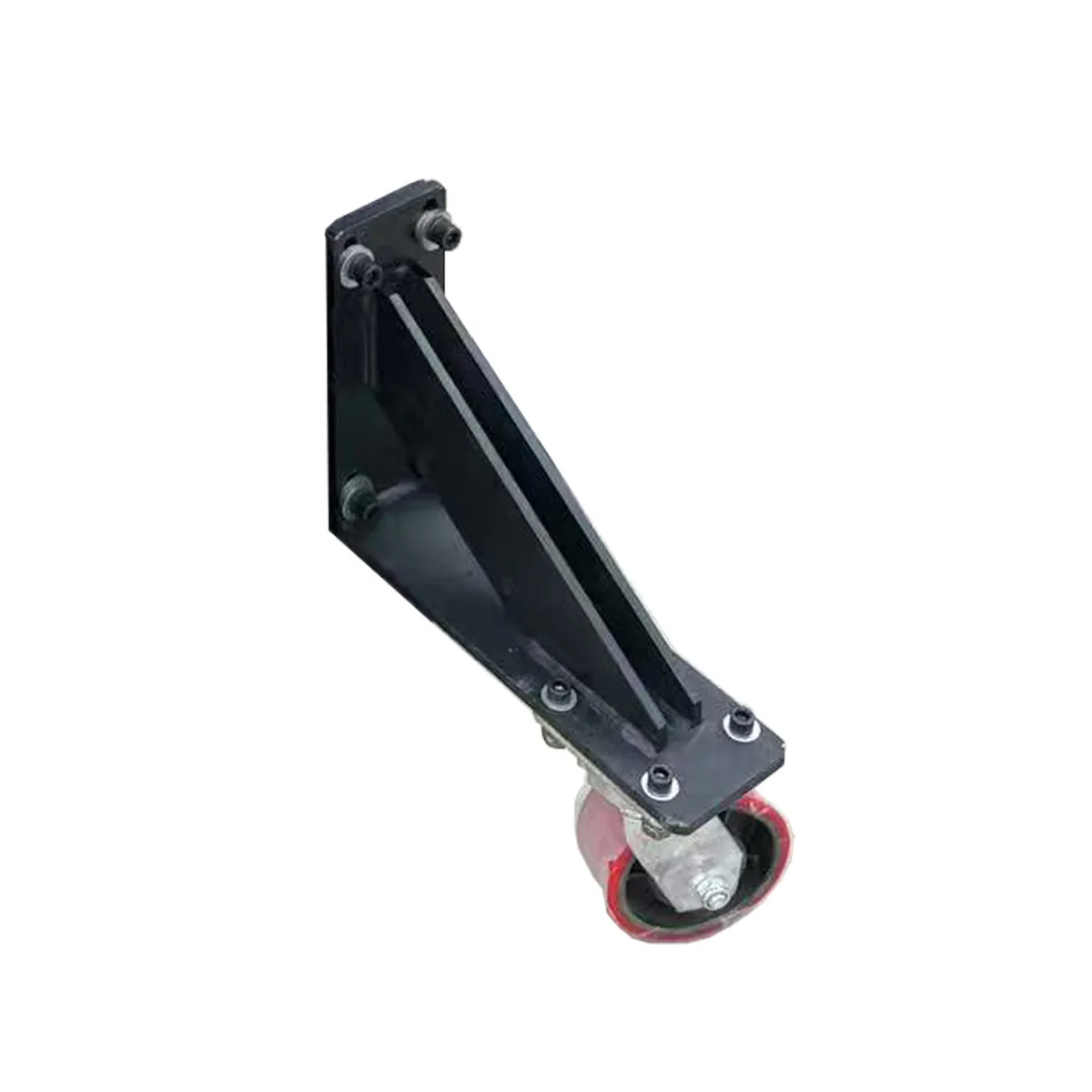
Connects the handle and chassis steering structure to deliver flexible and smooth traveling and steering control.
High-strength dual-column mast provides stable lifting guidance for pallet handling, loading and high stacking work.
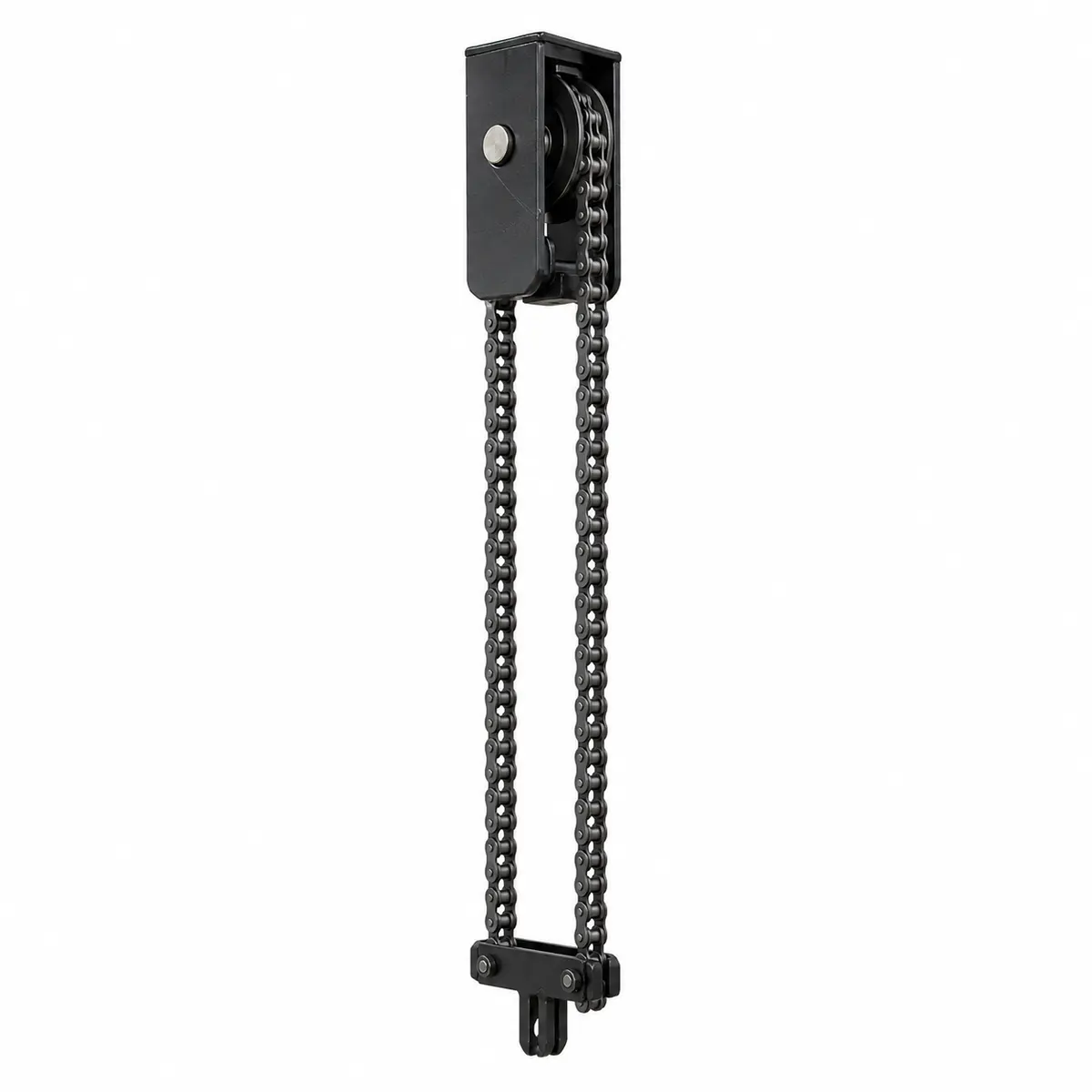
Transmits lifting power via sprockets and chains to drive the fork carriage for stable and reliable cargo lifting.
Supplies steady hydraulic power for fork movement and cooperates with chains to achieve smooth cargo lifting and lowering.
Metal grid shield isolates moving parts to prevent accidental contact with internal lifting and hydraulic components.
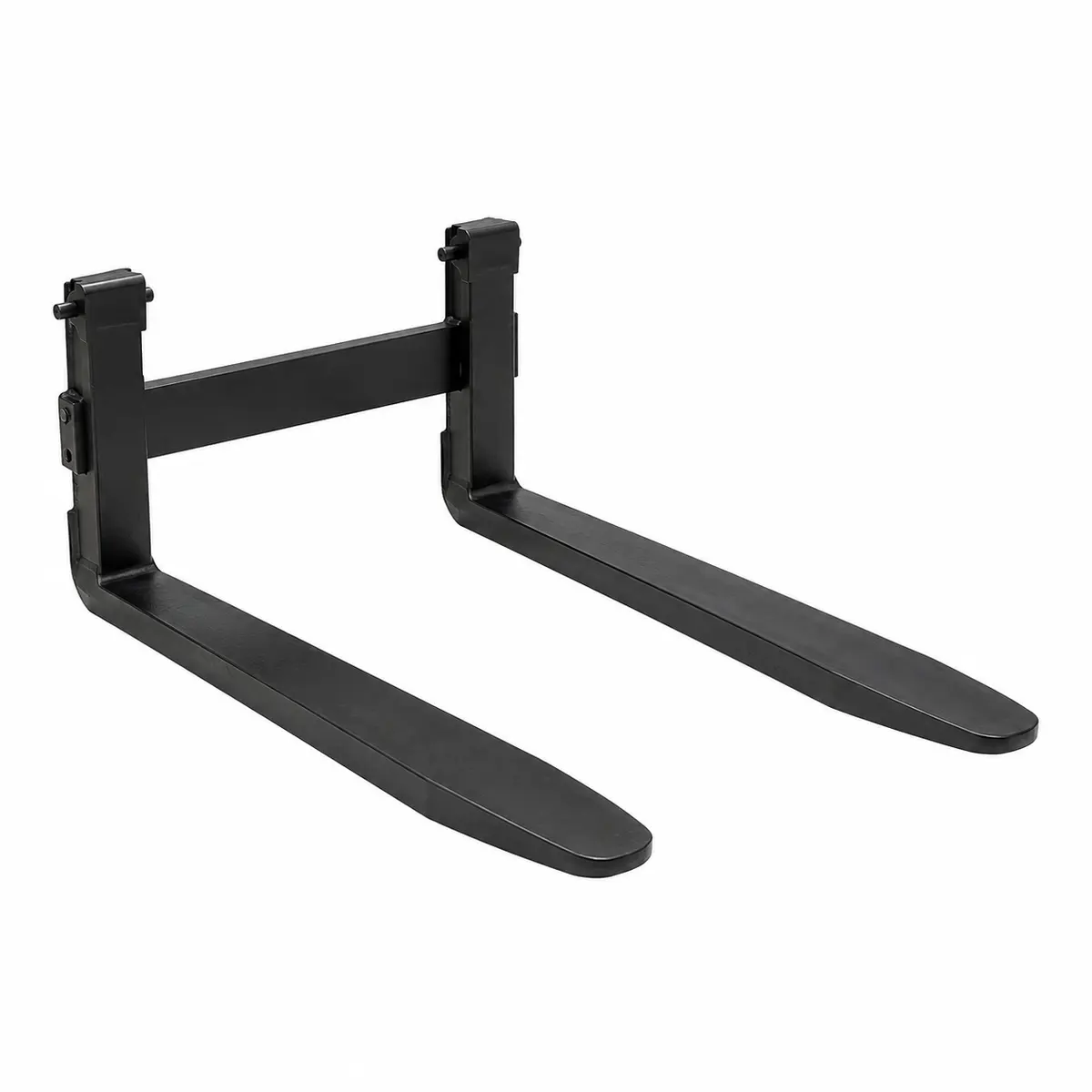
Moves vertically along mast rails to support dual forks and ensure stable and accurate cargo lifting guidance.
03 / Specs, Parts & Accessories
Video Showcase
Multiple angles highlight the green machine, mast, forks and controls.
Video Showcase · 00:28Multiple angles highlight the green machine, mast, forks and controls.
Operation Videos · 01:12Shows fork and mast lifting, pallet handling and handle control.
Service Videos · 00:33Machines braced inside containers and shipped by road and sea — tracked all the way to your site.
Real on-site records from our factory, offering a practical view of our production capability and delivery readiness.
04/ Product Review
Product Review
We centrally purchase equipment, test the data and the machine, then publish the models that clear our review. You get a shorter path from "could work" to a quote your team can act on.
1. It is commonly used for industrial parks, logistics routes, worksites and managed fleet operations, subject to the selected model and site conditions.
2. Match payload, dimensions, axle or tire specification, powertrain, route and regulatory requirements to the actual workload and operating environment.
3. Confirm model, color, payload, axle or tire specification and optional equipment, then verify the response time and any special requirements.
4. Prepare delivery inspection, approved registration where applicable and scheduled tire, brake and fluid checks; follow the manual for operation, inspection and routine maintenance.
 Simplified explanation
